
BSc Engineering (Hons) in
Mechanical Engineering
The BSc Engineering (Hons) in Mechanical Engineering at SLIIT provides a strong foundation in design, manufacturing, thermodynamics, and automation. With a balance of theoretical knowledge and hands-on experience, students develop problem-solving skills to tackle engineering challenges. The program emphasizes innovation, sustainability, and industry collaboration, ensuring graduates are equipped to excel in diverse sectors such as automotive, aerospace, energy, and robotics.
Awarding University
This recognized academic programme is awarded by SLIIT under the Faculty of Engineering.
Ensures globally accepted academic standards, preparing students with practical skills aligned to current industry needs and expectations.





Important date
02
2025Open Day-2025
Why & What..?
Mechanical Engineering is one of the most versatile and in-demand engineering disciplines, forming the backbone of industries such as manufacturing, automotive, aerospace and energy systems. This program is designed to equip students with technical expertise, analytical skills, and hands-on experience necessary to solve real-world engineering challenges.
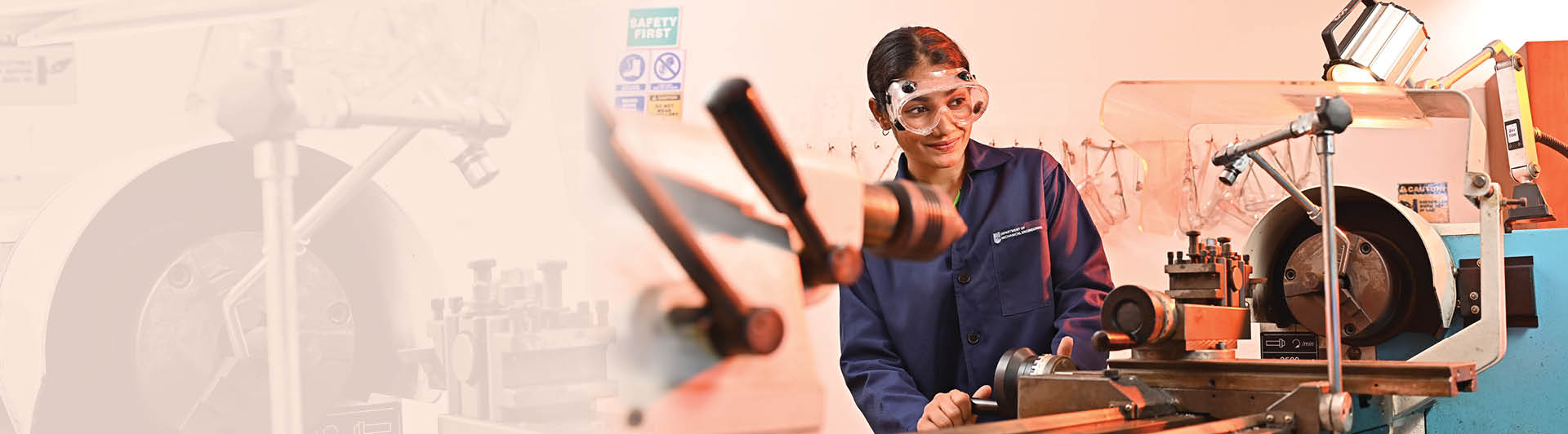
One of the key strengths of our program is its balance between theoretical knowledge and practical applications. Our state-of-the-art laboratories, computer-aided design (CAD) facilities, and hands-on workshops ensure that students gain invaluable experience in designing, testing, and optimizing mechanical systems. The curriculum also incorporates the latest trends in sustainability, automation, and advanced manufacturing, ensuring graduates are well-prepared for the evolving technological landscape.
Additionally, students benefit from industry training, research projects, and exposure to real-world engineering problems. Our strong ties with the industry provide excellent internship and employment opportunities. Whether you aim to work in multinational corporations, join academia, start your own business, or contribute to groundbreaking research, this program provides the perfect foundation for a successful career in mechanical engineering.
The B.Sc. (Hons) in Mechanical Engineering program at SLIIT offers a comprehensive curriculum designed to build a strong foundation in engineering principles with opportunities for specialization. The program includes:
-
First Two Years: Focus on fundamental engineering subjects such as statics, dynamics, thermodynamics, fluid mechanics, material science, and mathematics to develop essential technical and problem-solving skills.
-
Interdisciplinary Concepts: Introduction to subjects like sustainable engineering and electrical systems, broadening students’ expertise and versatility.
-
Specialized Topics: In later years, students study manufacturing processes, mechanical design, automatic control, mechatronics, and computational modelling.
-
Elective Courses: In the final year, students can specialize in areas like energy conservation, automotive engineering, vibration analysis, and advanced manufacturing.
-
Hands-On Experience: Includes industrial training, research projects, and design projects where students apply their knowledge to solve real-world engineering challenges.
This combination of rigorous coursework, hands-on experience, and industry exposure prepares graduates to tackle the evolving challenges in mechanical engineering and succeed in their chosen career paths.
Upon successful completion of the program, the graduates will be able to,
-
Apply knowledge of mathematics, basic sciences, engineering fundamentals and engineering specialization to solve complex engineering problems related to mechanical engineering.
-
Identify, formulate, research literature and analyze complex engineering problems related to mechanical engineering, reaching valid conclusions using first principles of mathematics, natural sciences and engineering sciences.
-
Design solutions for complex engineering problems and design systems, components, processes related to mechanical engineering that meet specified needs with appropriate consideration for public health and safety, cultural, societal and environmental considerations.
-
Investigate complex mechanical engineering problems using research-based knowledge and research methods including design of experiments, analysis and interpretation of data and synthesis of information to provide valid conclusions
-
Create, select and apply appropriate techniques, resources and modern engineering and IT tools to model and predict behavior of complex mechanical engineering systems with an understanding of the limitations.
-
Apply reasoning informed by contextual knowledge to assess the impacts of engineering solutions in a global, economic, environmental, societal, legal, cultural, health & safety issues and the consequent responsibilities relevant to the professional engineering practice.
-
Apply broad knowledge of sustainable development concepts and practices required for dealing with issues related to professional engineering practice
-
Apply ethical principles and commit to professional ethics and responsibilities and norms of engineering practice.
-
Function effectively within a multidisciplinary, multicultural and diverse team as a team member, manager or team leader.
-
Communicate effectively on complex engineering activities with the engineering community and with society at large, such as being able to comprehend and write effective reports and design documentation, make effective presentations, and give and receive clear instructions.
-
Demonstrate knowledge and understanding of engineering management principles and economic decision-making and apply these to one’s own work as a member and or a leader in a team, to manage projects and in multi-disciplinary and multicultural environments setting.
-
Recognize the need for and have the preparation and ability to engage in independent and life-long learning through continually extending and building on professional understanding and skills acquired during the undergraduate learning.
This degree provides a solid foundation for professional engineering careers or further studies at the postgraduate level.

-in-Mechanical-Engineering_1765512915.jpg)
-in-Mechanical-Engineering-_1765512968.jpg)
Programme Structure
-
First Year
Fundamentals of mechanics, mathematics, materials science, and engineering design. Introduction to sustainability and electrical systems.
-
Second Year
Advanced topics in thermodynamics, manufacturing, mechanical design, and fluid mechanics. First industry training.
-
Third Year
Specializations in mechatronics, automation, fluid flow modelling, and engineering management. Second industry training.
-
Fourth Year
Research projects and elective courses in areas like automotive engineering, energy conservation, and advanced manufacturing.
| Semester 1 | ||
|---|---|---|
| Code | Module | Credit |
| CE1011 | Engineering Mechanics | 4 |
| ME1010 | Engineering Design and Processes | 4 |
| EC1021 | Electrical Systems | 3 |
| MA1302 | Engineering Mathematics I | 3 |
| EL1200 | English Language Skills I | 3 |
| CE1912 | Introduction to Sustainable Engineering | 2 |
| Semester 2 | ||
|---|---|---|
| Code | Module | Credit |
| ME1030 | Engineering Skills Development | 3 |
| ME1040 | Engineering Principles and Communication | 4 |
| MT1010 | Engineering Materials | 4 |
| MA1312 | Engineering Mathematics II | 3 |
| EC1441 | Engineering Programming | 3 |
| EL1212 | English Language Skills II | 2 |
| Semester 1 | ||
|---|---|---|
| Code | Module | Credit |
| ME2011 | Mechanics of Solids I | 3 |
| CE2712 | Fluid Mechanics I | 4 |
| ME2021 | Mechanics of Machines I | 4 |
| ME2031 | Engineering Drawing | 4 |
| MA2302 | Engineering Mathematics III | 3 |
| Semester 2 | ||
|---|---|---|
| Code | Module | Credit |
| ME2041 | Thermodynamics | 3 |
| ME2051 | Mechanical Design I | 3 |
| ME2100 | Manufacturing Processes I | 3 |
| ME2170 | Electrical Plant | 3 |
| ME2081 | Engineering Sustainable Development | 3 |
| - | Humanities I | 0 |
| ME2911 | Industrial Training I | 0 |
| Semester 1 | ||
|---|---|---|
| Code | Module | Credit |
| ME3012 | Thermal Engineering Processes | 3 |
| ME3100 | Manufacturing Processes II | 3 |
| ME3031 | Mechanics of Solids II | 4 |
| ME3041 | Mechanics of Machines II | 4 |
| - | Humanities II | 0 |
| Semester 2 | ||
|---|---|---|
| Code | Module | Credit |
| ME3052 | Mechanical Design II | 3 |
| ME3061 | Fluid Flow Modelling | 3 |
| ME3020 | Automatic Control I | 3 |
| ME3640 | Mechatronics Systems | 3 |
| ME3081 | Engineering Management | 3 |
| ME3091 | Law for Engineers | 3 |
| ME3911 | Industrial Training II | 0 |
| Semester 1 | ||
|---|---|---|
| Code | Module | Credit |
| ME4250 | Mechanical Engineering Research Project | 3 |
| ME4300 | Comprehensive Design Project | 3 |
| ME4071 | Production and Operations Management | 3 |
| ME4132 | Professional Practice | 2 |
| Elective(7) | ||
| ME4111 | Industrial Management and Marketing | 3 |
| ME4021 | Advanced Engineering Materials | 3 |
| ME4030 | Vibration | 3 |
| ME4050 | Computer Aided Engineering | 3 |
| ME4081 | Computer Aided Design and Manufacture | 3 |
| ME4091 | Energy Technology and Sustainability | 3 |
| ME4101 | Refrigeration and Air Conditioning | 3 |
| Semester 2 | ||
|---|---|---|
| Code | Module | Credit |
| ME4250 | Mechanical Engineering Research Project | 3 |
| ME4300 | Comprehensive Design Project | 3 |
| ME4181 | Industrial Engineering | 3 |
| ME4220 | Automotive Engineerin | 3 |
| Elective(7) | ||
| ME4140 | Design for Manufacturing | 3 |
| ME4150 | Automatic Control II | 3 |
| ME4160 | Product Design | 3 |
| ME4170 | Noise | 3 |
| ME4190 | Advanced Manufacturing Processes | 3 |
| ME4201 | Energy Conservation & Management | 3 |
| ME4210 | Fluid Power Systems and Machinery | 3 |
More about the program
Local A/Ls: Minimum of 2 "C" passes & 1 "S" pass in the Physical Science stream (Covering Combined Mathematics, Physics & Chemistry).
Cambridge/Edexcel A/Ls: Minimum of 2 "B" passes & 1 "C" pass (Covering Mathematics, Physics & Chemistry).
Applicants should also pass the Aptitude Test conducted by SLIIT.
- Mechanical Engineer
- Automobile Engineer
- Automation Engineer
- Maintenance Engineer
- Design and Manufacturing
- Thermal Engineer, Industrial Engineer
- Entrepreneur
- University Lecturer
- Researcher
A semester fee of Rs. 435,000 will have to be paid to SLIIT for a period of 4 years. (Please Note that an year comprises of 2 Semesters)
The B.Sc. (Hons) in Mechanical Engineering is a comprehensive, industry-oriented program that equips students with essential technical knowledge and practical skills. It covers core mechanical engineering principles alongside advanced specialisations, preparing graduates for diverse and evolving engineering challenges. With a blend of theory, hands-on training, and industry exposure, the program offers a strong foundation for careers in industry, research, academia, or entrepreneurship.
FAQs
Graduates can pursue careers in automotive, aerospace, energy, manufacturing, robotics, and mechatronics industries. They can also work in research and development, engineering consultancy, and project management.
Yes, the program includes two industrial training sessions, where students gain hands-on experience working in real engineering environments. These internships enhance employability and provide valuable industry exposure.
Yes, the final year offers elective courses that allow students to focus on specialized fields such as automotive engineering, vibration analysis, energy technology, and advanced manufacturing processes.
Sustainability and energy conservation are key themes in the curriculum, ensuring students learn how to develop eco-friendly engineering solutions. Additionally, the program integrates cutting-edge technologies such as automation, mechatronics, and computer-aided design.