From Ideas to Impact: Celebrating SLIIT’s Research Journey
Discover the people behind SLIIT’s research success. From groundbreaking student projects to award-winning faculty work, our stories showcase innovation, resilience, and real-world impact. These inspiring narratives reflect the university’s commitment to shaping a better future through research that matters.

Annual Publications
Drive impactful knowledge through globally recognised journals and conferences.

Active Research Projects
Innovate with interdisciplinary initiatives addressing real-world challenges.

Research Collaborations
Partner with leading universities, industries, and communities worldwide.

Dedicated Research Centers of Excellence
Work in specialized centers fostering excellence and innovation.
Our Stories
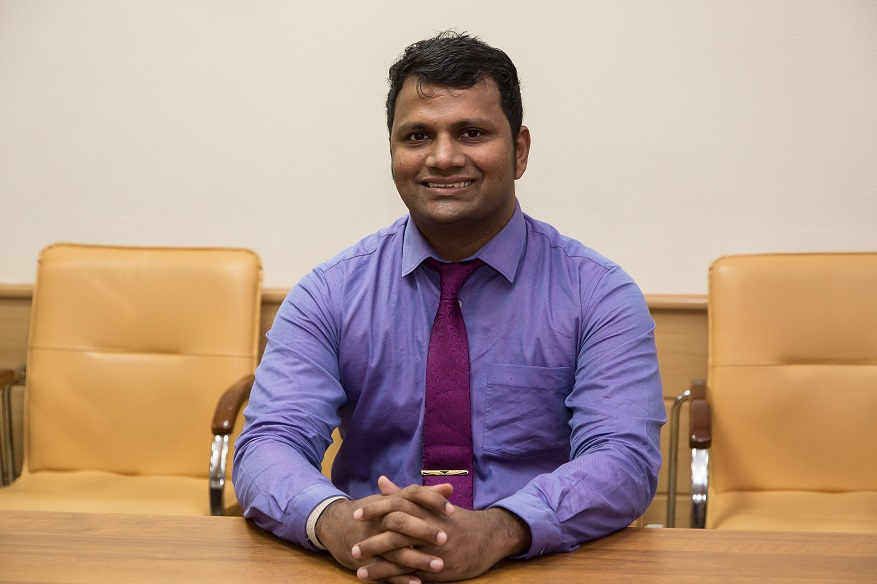

Professor Dush N. K. Jayakody:Pioneering in Coded Wireless Power for UAV Networks
Hailed as a leading mind in next-generation wireless communications, Professor Dush N. K....
Read More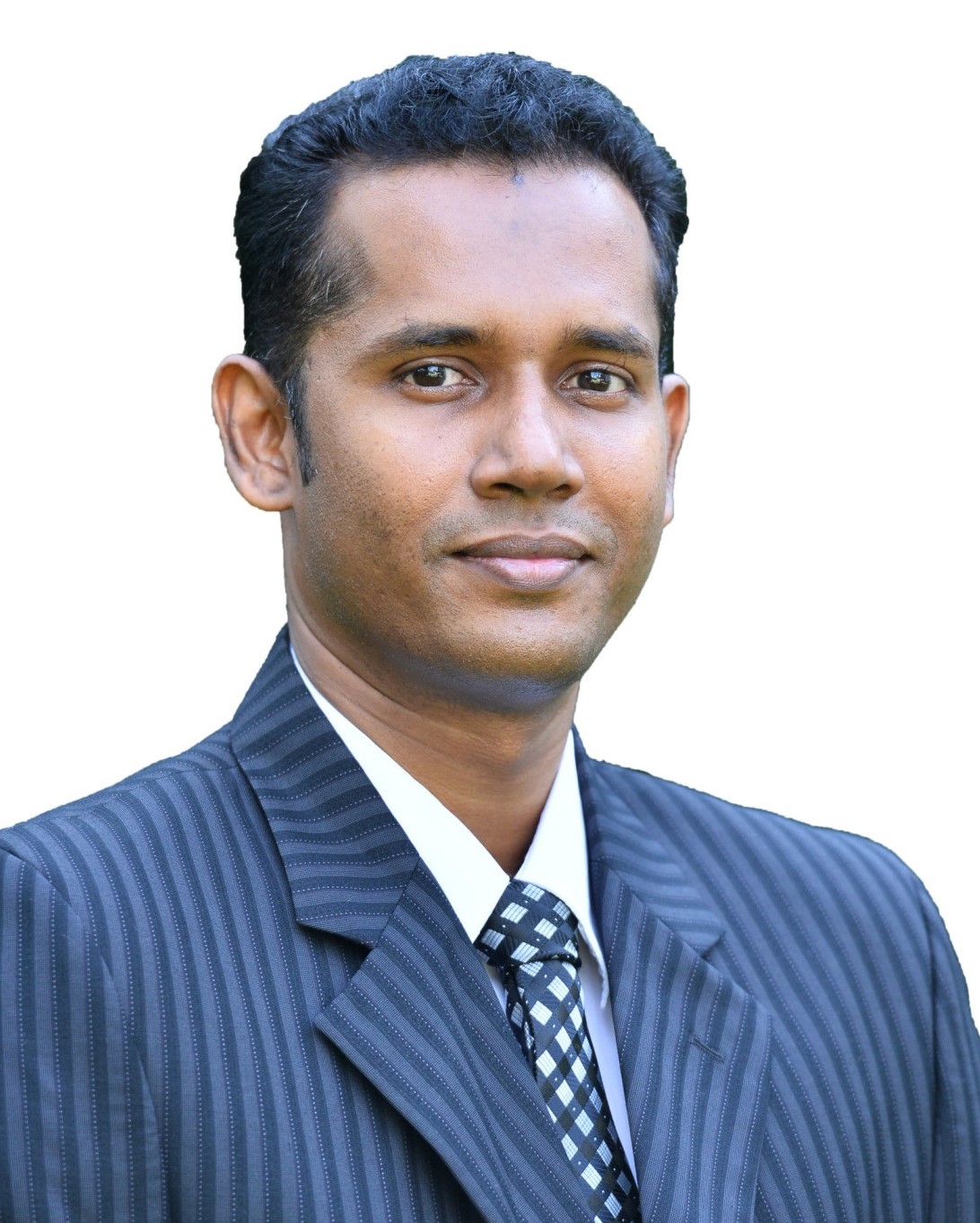
Prof. Ruwan Jayathilaka’s Research Legacy at SLIIT
Prof. Ruwan Jayathilaka’s academic journey at SLIIT is a powerful example of how rigorous rese...
Read More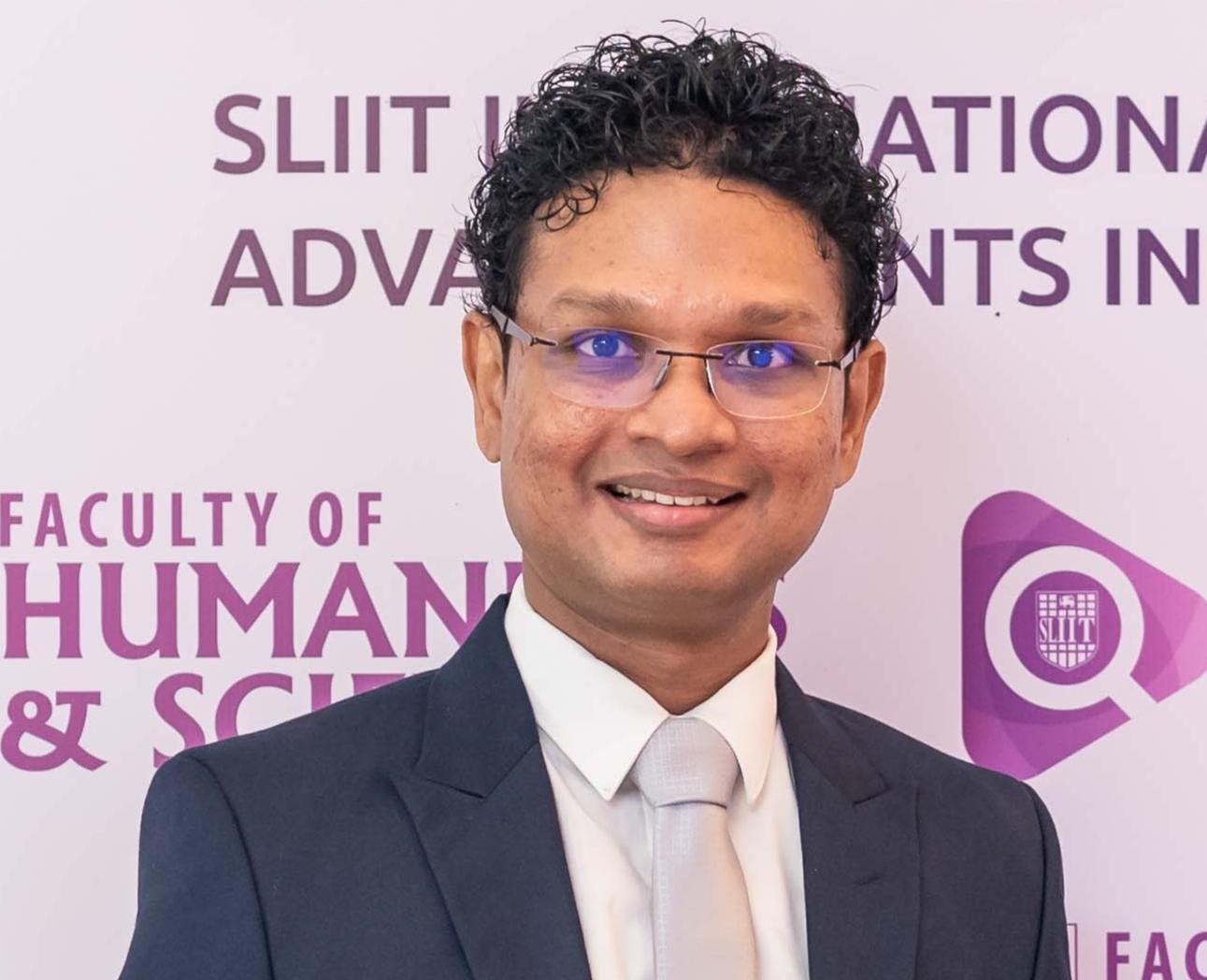
Professor Jayaruk Story
Professor Jayaruk is a distinguished academic and researcher in the field of Analytical Chemistry. H...
Read More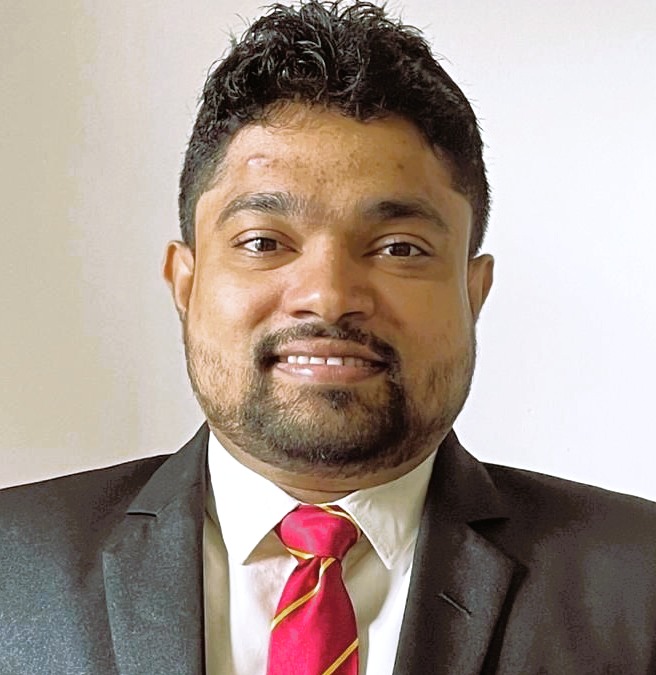
Professor Dhanushka Udayanga’s Research Journey
Professor Dhanushka Udayanga has established himself as a leading early-career scientist specializin...
Read MoreWe Work Hard To Prepare Every Student For Their Professional Life
Professor Dush N. K. Jayakody:Pioneering in Coded Wireless Power for UAV Networks

Hailed as a leading mind in next-generation wireless communications, Professor Dush N. K. Jayakody has built his research career around one central question:
How can we design wireless networks that are not only faster, but also smarter, more energy-efficient and resilient in the real world?
A Senior Member of IEEE and Fellow of IET, Prof. Jayakody has been ranked among the top 2% of scientists in the world (Stanford–Elsevier list, 2021–2023) and received the Sri Lankan Presidential Award for Outstanding Research Performance in 2021. He is currently a Professor at the Faculty of Engineering at Sri Lanka Institute of Information Technology, Sri Lanka. In addition to this, he is also a FCT Professor at Lusofona University Portugal and serves as a Visiting Professor at Carnegie Mellon University, USA.Inventing the Soft Information Relaying Principle
During his PhD in Electronics and Communications Engineering at University College Dublin, Prof. Jayakody introduced what has come to be known as the “Soft Information Relaying Decoding” theory later industries adapted it for poor channel conditions.
Classical cooperative relaying protocols often assume that a relay node decodes the signal, makes a hard decision (bits 0/1), and then forwards that decision. This hard decision process discards uncertainty information that could be useful at the destination.Prof. Jayakody’s insight was simple but powerful: Instead of throwing away uncertainty, preserve and forward it.
The Jayakody Soft Information Relaying Principle provides a systematic framework in which the relay forwards soft information—for example, log-likelihood ratios or reliability metrics—rather than hard bits alone. This principle has influenced subsequent work on cooperative communications, relaying protocols, and advanced receiver design, especially in scenarios where reliability is critical, but resources are constrained.
Pioneering wireless power transfer in UAV communications
As wireless networks evolved beyond traditional base stations, Prof. Jayakody turned his attention to the skies.In the mid-2010s, unmanned aerial vehicles (UAVs) were increasingly proposed as flying base stations or relays, but one major bottleneck remained unsolved: energy. UAVs have limited battery life, and replacing or recharging batteries manually limits their usefulness in persistent coverage and disaster scenarios.
Prof. Jayakody and his collaborators were among the first to introduce wireless power transfer concepts into UAV-assisted communication networks, asking:What if UAVs could be powered—or at least significantly supported—by energy harvested from the very signals they help transmit?
In 2017, he proposed a unified energy harvesting scheme for UAV-assisted systems. This early work on energy-aware UAV networks helped open a new research direction where UAVs are not just communication relays, but nodes in a self-sustaining wireless energy ecosystem.
Beyond 5G: towards 6G, semantic and quantum-inspired networks
Building on these theoretical foundations, Prof. Jayakody’s broader research program covers:
• 5G/6G wireless systems and physical-layer design,
• Underwater visible light communications, SWIPT and energy-harvesting networks,
• Hybrid VLC/THz communication for high-capacity links,
• NOMA and RSMA-based cooperative systems, and
• Emerging semantic and quantum-inspired secure communication schemes.

Proposed hybrid solar- and RF-powered surface buoy architecture for underwater links. The base station transfers both energy and information to the surface buoy, which in turn powers and communicates with the autonomous underwater vehicle (AUV); red dashed arrows indicate energy flow, and green dashed arrows indicate information flow.
A recurring theme is the joint design of energy, information, and topology—whether in UAV-assisted rural networks, underwater VLC/THz links, or dense urban environments.
“Future networks must be intelligent in how they use energy, spectrum, and structure,”
Prof. Jayakody says; “It’s not only about higher data rates; it’s about sustainable, resilient connectivity for real people in real environments.”
Prof. Jayakody’s research journey spans Europe, Asia, and the Americas, with postdoctoral work in Estonia and Norway and Texas A & M University USA, a professorship at Tomsk Polytechnic University in Russia, and long-term SPARC appointments at NIT Tiruchirappalli in India focused on advanced wireless and 6G systems. He has also held visiting and sabbatical roles in Australia, the USA, Finland, and Brazil, building a network of international collaborations. This truly global pathway now feeds directly into his work at SLIIT, where he leverages these partnerships to create opportunities, joint projects, and mobility pathways for Sri Lankan students and young researchers.
Across these roles, he has:
• Supervised over 10 PhD students, numerous master’s students, more than 50 undergraduate students, and 5 postdoctoral researchers,
• Secured nearly USD 6 million in competitive research funding, and
• Published over 230 peer-reviewed journal and conference papers and books.

Meeting the Vice-Chancellor of NIT Trichy (2024) during advisory visit on establishing the 6G Research Laboratory at NITT.
His work has been recognised with multiple Best Paper Awards (IEEE ICCMIT 2017, ETIC 2019, ICARC 2024, ICAC 2024, IRC 2023) and an Education Leadership Award from the World Academic Congress (2019), among other honors.
Building a research culture at SLIIT
At SLIIT, Prof. Jayakody channels his global experience into building a strong, internationally connected research culture in wireless communications and IoT through the Centre of Excellence in Intelligent Electronics & Transmission (CIET).
Currently, he is conducting advanced research on vehicular-to-infrastructure (V2I) communication at Carnegie Mellon University, USA, the university ranked No 1 worldwide in computer science and robotics in the QS 2025 rankings. This work focuses on future-proof spectrum access, reliability, and energy efficiency for connected and autonomous vehicles, and directly feeds back into his teaching and supervision at SLIIT.

Meeting with Prof. Jon Peha and Adam Loucks at Carnegie Mellon University (2025) to discuss collaborative research on future wireless networks, spectrum policy, and 6G/V2X innovations
He integrates his theoretical and system-level contributions—directly into: Final-year and postgraduate projects, PhD supervision under CIET, and Collaborative research programmes linking SLIIT with laboratories in Europe, India, North America, and beyond.
“My ambition is that when people talk about innovative wireless research from South Asia,SLIIT appears naturally in that conversation,” he says.“If our theories, models, and prototypes help our students stand confidently on the world stage, then the journey has been worth it.”
Prof. Ruwan Jayathilaka’s Research Legacy at SLIIT
Prof. Ruwan Jayathilaka’s academic journey at SLIIT is a powerful example of how rigorous research, visionary leadership, and deep mentorship can converge to create lasting impact. As the Head of the Department of Information Management at SLIIT Business School, he has played a transformative role in elevating the university’s research culture — one grounded in empirical insight and committed to societal relevance.
A hallmark of his academic contribution is his unwavering commitment to student-centred research. He has co-authored more than 75 Scopus Q1-ranked journal articles in collaboration with SLIIT undergraduate and postgraduate students — a rare and remarkable achievement in Sri Lankan higher education. Under his mentorship, students are not only trained in rigorous research methodology but also guided toward international publication and scholarly engagement.
Prof. Jayathilaka’s excellence in research has been recognised multiple times with the SLIIT Researcher of the Year Award, underscoring his consistent output of high-impact, peer-reviewed work. In parallel, he has been honoured with the SLIIT Outstanding Teacher Award (Senior) on several occasions, reflecting his ability to inspire in both the classroom and the research sphere.
In 2024, he received national recognition with the National Educator Award (Gold Award) for his outstanding achievement and contribution to the discipline of Business and Management. This prestigious honour celebrates his leadership in shaping a generation of future scholars and his enduring contribution to knowledge creation in the field.
His research focuses on addressing complex interdisciplinary challenges at the intersection of economics, digitalisation, sustainability, health, and public policy. Drawing on large-scale datasets and advanced econometric techniques, Prof. Jayathilaka explores critical themes including globalisation and development, business analytics and digital transformation, development economics and economic policy, applied econometrics and quantitative analysis, health economics and public health, tourism and consumer behaviour, environmental economics and sustainability, and social policy and inclusion in business.
Beyond individual accolades, Prof. Jayathilaka has been instrumental in shaping a collaborative, forward-thinking research culture at SLIIT. He actively supports academic staff in launching research initiatives, publishing in reputed journals, and forming cross-disciplinary research teams. His international collaborations have helped position SLIIT as a contributor to global academic discourse.
Despite the demands of leadership, teaching, and scholarship, Prof. Jayathilaka remains dedicated to producing research that informs policy, advances theory, and creates real-world value. His legacy is not only in what he publishes but in how he empowers others to engage in meaningful, high-quality research.
For Prof. Ruwan Jayathilaka, research is not just an academic exercise — it is a lifelong mission to transform insight into impact. Through his vision, mentorship, and scholarly excellence, he continues to define and drive SLIIT’s role as a hub of research innovation in Sri Lanka and beyond.
Professor Jayaruk Story
Professor Jayaruk is a distinguished academic and researcher in the field of Analytical Chemistry. He is an alumnus of Richmond College, Galle, and the University of Colombo, where he completed his undergraduate studies. He earned his Ph.D. in Analytical Chemistry from the University of Alabama, USA, with a research focus on the synthesis, characterization, and application of metal nanoparticles supported on porous carbon materials. During his doctoral studies, he gained extensive expertise in advanced nanotechnology techniques.
Since joining the Sri Lanka Institute of Information Technology (SLIIT) in 2017, Professor Jayaruk has been actively involved in teaching and mentoring undergraduate and postgraduate students. His teaching portfolio includes Analytical Chemistry, Physical Chemistry, Biochemistry, Introduction to Nanotechnology, and Experimental and Research Design.
Professor Jayaruk’s research focuses on the development of sustainable nanomaterials for applications in environmental protection and human health. He is particularly dedicated to adding value to Sri Lanka’s abundant natural resources—such as ilmenite, graphite, and clay—as well as agricultural and marine waste materials, including rice husks, coconut husks, fruit waste, and shrimp shells. His work extends to the design of polymer- and nanomaterial-based delivery systems for the sustained release of pharmacologically active compounds. Additionally, he explores the development of novel materials targeting dermatological applications such as wound healing, sun protection etc. His research consistently emphasizes eco-friendly and innovative approaches aimed at contributing to a better world.
Professor Jayaruk has received prestigious research grants from both international and national funding bodies, including the World Bank, the Organization for Women in Science for the Developing World (OWSD) under the World Academy of Sciences (TWAS), the India-Sri Lanka Foundation, and the Sri Lanka Institute of Information Technology. He is actively engaged in collaborative research with international partners in the United Kingdom, Australia, and China, as well as with researchers across several Sri Lankan universities.
Prof. Jayaruk has been widely recognized for his excellence in teaching, research, and overall academic performance, earning several prestigious awards over the years. Notably, he received the Ramakrishna Memorial Award in 2024 from the Institute of Chemistry Ceylon, acknowledging his outstanding research in Analytical Chemistry conducted over the past five years. At the Sri Lanka Institute of Information Technology (SLIIT), he was honoured with the Outstanding Overall Achievement Award – Category B in 2023, reflecting his exceptional contributions across multiple domains. He was also the recipient of the Outstanding Researcher Award – Category B for two consecutive years, in 2022 and 2023, and the Outstanding Teacher Award in the Senior Lecturer Category in 2022, both presented by SLIIT, underscoring his dedication to both research and education.
Prof. Jayaruk warmly welcomes global collaborations aimed at advancing science for the benefit of humanity. With a strong belief in the power of collective knowledge and interdisciplinary partnerships, he actively seeks opportunities to engage with researchers, institutions, and organizations around the world. He envisions collaborative research as a driving force for transformative impact, fostering innovation that transcends borders and contributes meaningfully to the well-being of communities worldwide.
Professor Dhanushka Udayanga’s Research Journey
Professor Dhanushka Udayanga has established himself as a leading early-career scientist specializing in molecular systematics and the biotechnological applications of fungi. His academic journey began with a BSc in Molecular Biology and Biotechnology from the University of Peradeniya, where his fascination with fungi first developed.
In 2010, he commenced his PhD at Mae Fah Luang University, Thailand, under Prof. Kevin D. Hyde, conducting critical taxonomic revisions of Diaporthe and Colletotrichum. His research was enriched through advanced training at the Chinese Academy of Sciences, Beijing and United States Department of Agriculture-Agriculture Research Services, Beltsville, Maryland, working alongside renowned experts including Dr. Amy Rossman, and Dr. Lisa A. Castlebury.
Following his PhD completion in 2015, Prof. Udayanga served as a postdoctoral scientist at USDA-ARS in Maryland, focusing on the systematics and genomics of strawberry pathogens, especially within Diaporthales. Returning to Sri Lanka in 2017, he served as Senior Lecturer and Head of the Department of Biosystems Technology at the University of Sri Jayewardenepura. Since August 2024, he has held the position of Professor at the Sri Lanka Institute of Information Technology (SLIIT), where he leads the first institutional mycology research group.
His research outputs include resolving complex species boundaries within Diaporthe and Colletotrichum, characterizing grey blight fungi affecting tea plantations, redefining strawberry pathogens in the USA, and exploring biotechnological innovations such as plastic-degrading fungi and sustainable mycelium-based materials. His project on mycelium based materials has awarded numerous national and international awards due to its sustainable nature solving several pressing environmental challenges.
Prof. Udayanga has published over 70 peer-reviewed articles, with a current Google Scholar h-index of 30 and citations exceeding 5540. He is a frequent peer reviewer for over 20 international journals and serves as Sectional Editor for Phytotaxa. A dedicated mentor, he has supervised several MPhil and PhD candidates and trained over 25 undergraduates in mycology, molecular systematics, and fungal biotechnology. His mentorship extends internationally, with many of his former students pursuing advanced studies globally.
Prof. Udayanga’s contributions have been recognized through numerous university-level awards by his previous institutions affiliated with. Internationally, he received the Martin Baker Research Award from the Mycological Society of America in 2018. He has been consistently ranked among the top 2% of scientists worldwide (Stanford/Elsevier, 2021–2023).
In 2025, his dedication to advancing mycology was honored with the prestigious C.J. Alexopoulos Prize by the Mycological Society of America, marking his impact in fungal research and fostering applied mycology in the Global South. He is now striving towards a world-class mycology research hub at SLIIT, focusing on plant pathogen systematics, fungal genomics, and sustainable biotechnology innovations.
Prof Dhanushka Receiving CJ Alexapoulos award at the Annual Meeting of Mycological Society of America Held in University of Wisconsin-Madison, USA with president of MSA Prof Timothy James.