
BSc Engineering (Hons) in
Civil Engineering
The BSc Engineering (Hons) in Civil Engineering at SLIIT provides students with a comprehensive understanding of engineering principles, construction materials, structural analysis, and project management. The program blends theoretical learning with practical skills, preparing graduates for successful careers in infrastructure design, construction, and maintenance. Students gain exposure to real-world projects, laboratory work, and internships, ensuring they are equipped to address the challenges of modern civil engineering.
Awarding University
This recognized academic programme is awarded by SLIIT under the Faculty of Engineering.
Ensures globally accepted academic standards, preparing students with practical skills aligned to current industry needs and expectations.





Important date
02
2025Open Day-2025
06
2025Open Day-2025
01
2025Open Day-2025
08
2025Open Day-2025
09
2025Open Day-2025
Why & What..?
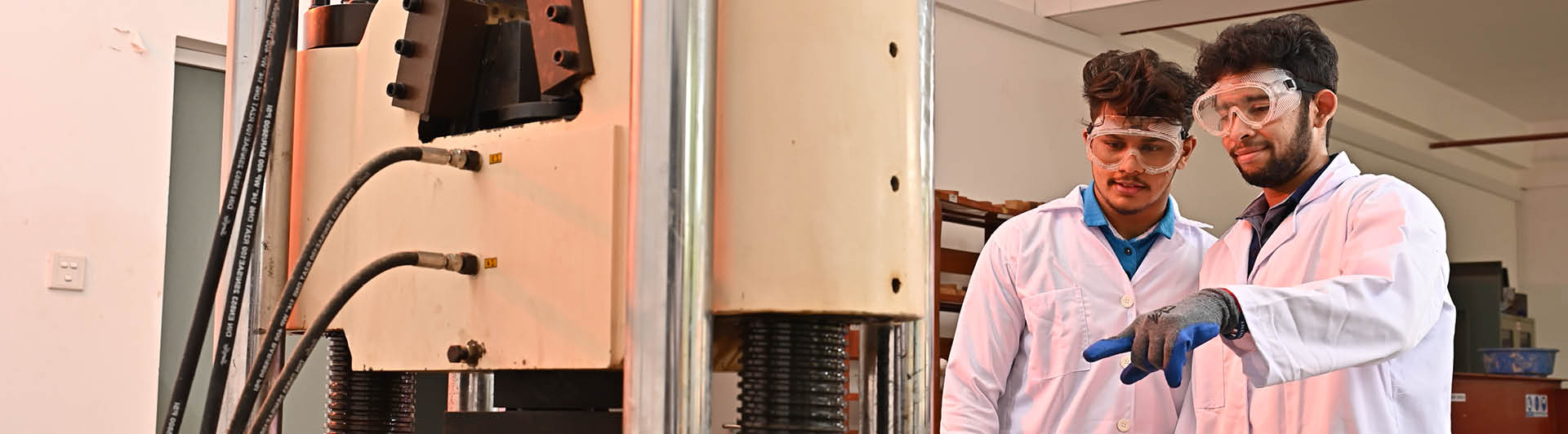
The SLIITs Civil Engineering program is an excellent blend of science and engineering fundamentals and essential practical skills. The four-year program leading to the degree of Bachelor of Science of Engineering Honours in Civil Engineering is carefully designed to maintain a judicious balance between theoretical foundations and practical applications. Students will be exposed to a rigorous academic program, and at the same time, they will be provided ample opportunities to gain hands-on experience in well-equipped laboratories and during exciting field excursions.
The Civil Engineering program at SLIIT includes project work based on laboratory experiments, literature reviews, fieldwork, and seminars. Students enrolled in the program must complete six months of compulsory industrial training at the end of their 2nd and 3rd years, divided into two three-month periods, along with a ten-day outstation survey camp in the 3rd year. This industrial training and survey camp provides valuable real-world experience, enhancing students' skills and preparing them for professional roles in the civil engineering field. The program offers a well-rounded education, ensuring that students are equipped to meet the challenges of the industry.
The BSc Engineering (Hons) in Civil Engineering program at SLIIT provides both theoretical and practical knowledge in civil engineering. Core modules cover:
-
Engineering Mechanics - Fundamental principles of mechanics applied in engineering.
-
Structural Analysis - Analysis and design of structures for stability and safety.
-
Materials - Study of properties and behaviour of construction materials.
-
Fluid Mechanics- Understanding fluid behaviour in engineering applications.
-
Structural Design - Techniques for designing structures to ensure safety and functionality.
-
Geotechnical Engineering - Study of soil and rock behaviour in engineering projects.
-
Transportation Systems - Design and management of transportation infrastructures.
-
Environmental Engineering - Addressing environmental issues through sustainable engineering solutions.
-
Construction Technology - Modern construction methods and techniques.
-
Construction Project Management - Skills for managing construction projects and controlling costs.
-
Cost Analysis - Techniques for evaluating and managing engineering project costs.
-
Engineering Communication - Development of communication skills for professional settings.
The program emphasizes hands-on learning, including laboratory experiments, fieldwork, and industrial training. Later stages focus on specialized areas like foundation engineering, water systems, and sustainable development. Students also engage in design projects, applying theoretical learning to solve complex engineering problems.
Upon completing the SLIIT’s BSc Engineering (Hons) in Civil Engineering program, graduates will be able to:
-
Apply mathematics, basic sciences, and engineering principles to solve real-world engineering challenges.
-
Analyze and formulate solutions for civil engineering problems and design systems to meet specific needs.
-
Utilize research-based methods to solve complex engineering issues.
-
Gain proficiency in modern engineering tools and techniques, applying appropriate resources for advanced tasks.
-
Assess the broader impacts of engineering solutions in global, environmental, legal, and societal contexts, with a strong focus on sustainability.
-
Make ethical decisions and adhere to professional responsibility, ensuring compliance with industry standards.
-
Develop leadership, teamwork, and communication skills, working effectively with diverse teams and stakeholders.
-
Integrate knowledge of engineering, management, and finance to manage engineering projects efficiently.
-
Engage in lifelong learning, continually updating skills and knowledge to stay current with industry advancements.
This program equips graduates with a comprehensive set of skills to excel in the field of civil engineering, preparing them for a successful career and contributing to sustainable development.


Programme Structure
-
First Year
Foundation of Engineering Principles. The first year of Civil Engineering builds foundational knowledge in engineering principles, design, mathematics, communication, and sustainability.
-
Second Year
Core Civil Engineering Topics and Practical Training. In the second year, students study specialized topics, gain hands-on experience, and apply knowledge through Industrial Training and surveying.
-
Third Year
Advanced Applications and Project Management. In the third year, students focus on advanced engineering topics, project management, and real-world applications.
-
Fourth Year
Specialisation and Comprehensive Project Work. In the final year, students specialize through electives, engage in design projects, and focus on sustainability and project management.
| Semester 1 | ||
|---|---|---|
| Code | Module | Credit |
| CE1011 | Engineering Mechanics | 4 |
| ME1010 | Engineering Design and Processes | 4 |
| EC1021 | Electrical Systems | 3 |
| MA1302 | Engineering Mathematics I | 3 |
| EL1202 | English Language Skills I | 3 |
| CE1912 | Introduction to Sustainable Engineering | 2 |
| Semester 2 | ||
|---|---|---|
| Code | Module | Credit |
| ME1030 | Engineering Skills Development | 3 |
| ME1040 | Engineering Principles and Communication | 4 |
| MT1010 | Engineering Materials | 4 |
| MA1312 | Engineering Mathematics II | 3 |
| EC1441 | Engineering Programming | 3 |
| EL1212 | English Language Skills II | 2 |
| Semester 1 | ||
|---|---|---|
| Code | Module | Credit |
| CE2011 | Structural Analysis I | 4 |
| CE2712 | Fluid Mechanics | 4 |
| CE2021 | Properties and Mechanics of Materials | 3 |
| CE2211 | Civil Engineering Methods | 4 |
| MA2302 | Engineering Mathematics III | 3 |
| Semester 2 | ||
|---|---|---|
| Code | Module | Credit |
| CE2812 | Geotechnical Engineering I | 3 |
| CE2032 | Structural Design I | 4 |
| CE2042 | Structural Analysis II | 4 |
| CE2051 | Advanced Mechanics of Materials | 3 |
| ME2720 | Introduction to Thermal Processes | 2 |
| - | Humanities I | 2 |
| CE2911 | Industrial Training I | 3 |
| CE2940 | Civil Engineering Surveying Camp | 1 |
| Semester 1 | ||
|---|---|---|
| Code | Module | Credit |
| CE3012 | Structural Analysis III | 3 |
| CE3712 | Pumps & Open Channel Flow | 3 |
| CE3022 | Structural Design II | 4 |
| CE3811 | Geotechnical Engineering II | 3 |
| CE3211 | Civil Engineering Project and Cost Management | 3 |
| - | Humanities II | 2 |
| Semester 2 | ||
|---|---|---|
| Code | Module | Credit |
| CE3611 | Environmental Engineering | 3 |
| CE3822 | Geotechnical Engineering III | 3 |
| CE3411 | Transportation Engineering | 3 |
| CE3231 | Project Formulation | 3 |
| CE3221 | Construction Technology and Methods | 3 |
| CE3922 | Civil Engineering Seminar | 1 |
| CE3911 | Industrial Training II | 3 |
| Semester 1 | ||
|---|---|---|
| Code | Module | Credit |
| CE4211 | Comprehensive Design Project I | 3 |
| CE4221 | Civil Engineering Practice, Quality and Legislation | 3 |
| CE4912 | Civil Engineering Project I | 3 |
| CE4741 | Engineering Hydrology | 3 |
| Elective(6) | ||
| CE4811 | Foundation Engineering I | 3 |
| CE4411 | Traffic Engineering and Planning | 3 |
| CE4711 | Water Systems & Hydraulic Structures | 3 |
| CE4011 | Finite Element Methods in Structural Engineering | 3 |
| CE4041 | Structural Design III | 3 |
| CE4611 | Environmental Engineering Design | 3 |
| Semester 2 | ||
|---|---|---|
| Code | Module | Credit |
| CE4921 | Sustainble Development in Civil Engineering | 3 |
| CE4251 | Comprehensive Design Project II | 3 |
| CE4931 | Civil Engineering Project II | 3 |
| CE4261 | Construction Project Management | 3 |
| Elective(5) | ||
| CE4821 | Foundation Engineering II | 3 |
| CE4421 | Pavement Design and Maintenance | 3 |
| CE4731 | Environmental Hydraulics & Hydrology | 3 |
| CE4021 | Structural Dynamics and High Rise Buildings | 3 |
| CE4031 | Advanced Concrete Design | 3 |
More about the program
Local A/Ls: Minimum of 2 "C" passes & 1 "S" pass in the Physical Science stream (Covering Combined Mathematics, Physics & Chemistry).
Cambridge/Edexcel A/Ls: Minimum of 2 "B" passes & 1 "C" pass (Covering Mathematics, Physics & Chemistry).
Applicants should also pass the Aptitude Test conducted by SLIIT.
A semester fee of Rs. 435,000 will have to be paid to SLIIT for a period of 4 years. (Please Note that a year comprises of 2 Semesters)
A well-rounded program combining theoretical foundations, practical training, and industry exposure, equipping students with the skills needed for a successful career in civil engineering.
FAQs
Examinations for the BSc Engineering (Hons) in Civil Engineering are typically held on weekdays. The academic schedule is structured to ensure students have ample time to prepare and participate in both theoretical and practical assessments.
It is full-time.
Should be over 18 years.
Educational qualifications, birth certificate, national Identity card (NIC).
Two colour passport-size photographs.
Yes, it is essential that you attend in person for registration, as there may be clarifications to be made. In unavoidable circumstances, you may send all relevant documents, along with copies, through a nominated person accompanied by a letter of authorisation.
Payment can be made in two or four instalments