





 +94 11 754 4801
 info@sliit.lk
Advancing Education Through Meaningful Alliances
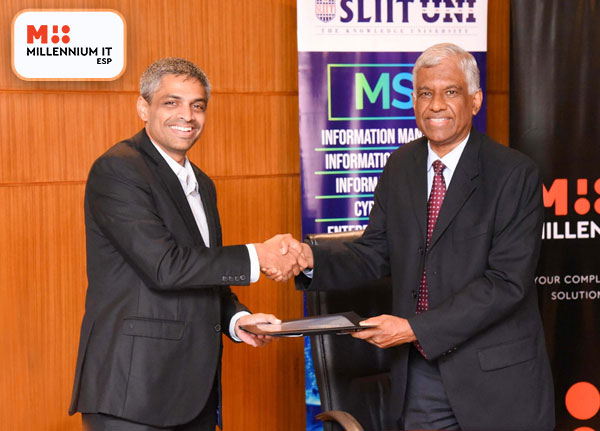
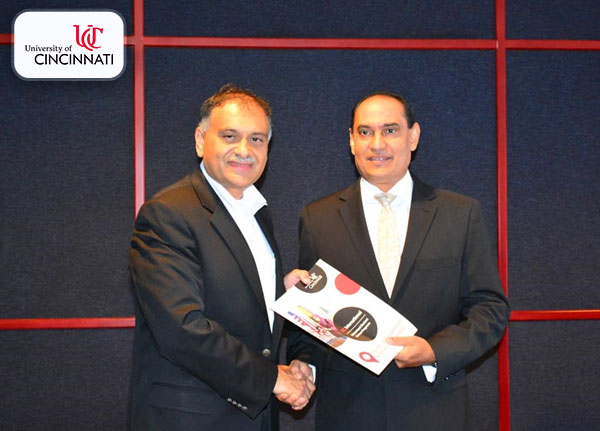
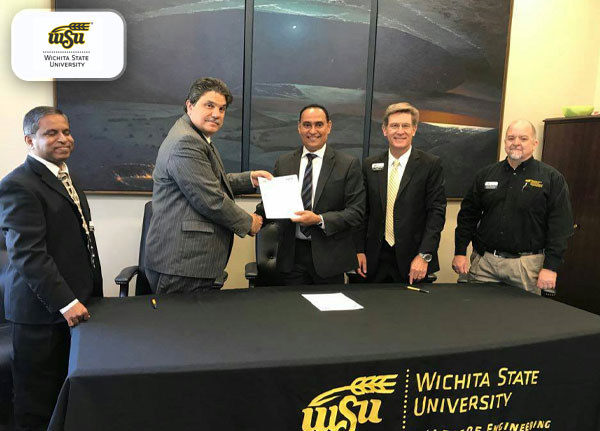
SLIIT’s Department of Software Engineering fosters strong collaborations with software companies, professional bodies, and global universities to enhance academic and professional development. These partnerships offer students real-world exposure through internships, workshops, and joint industry projects.
With a focus on modern methodologies, software design, and agile development, the department ensures students gain relevant skills and practical experience. Academic exchange and research collaborations further promote innovation and thought leadership. These strong linkages prepare students for success in a competitive software development environment, while contributing to industry-relevant solutions.

Industry Partnership


Institutional Partnerships
The MoU was signed between Prof. Nimal Rajapakse, Deputy Vice-Chancellor of SLIIT, and Mr. Bimal Wijayasinghe, Executive President of the OBA, in the presence of a bilateral delegation representing both SLIIT and ACOBA. This mutually beneficial partnership is aimed at knowledge sharing and to provide exclusive educational opportunities for prospective students from Ananda College to study at SLIIT.
View Details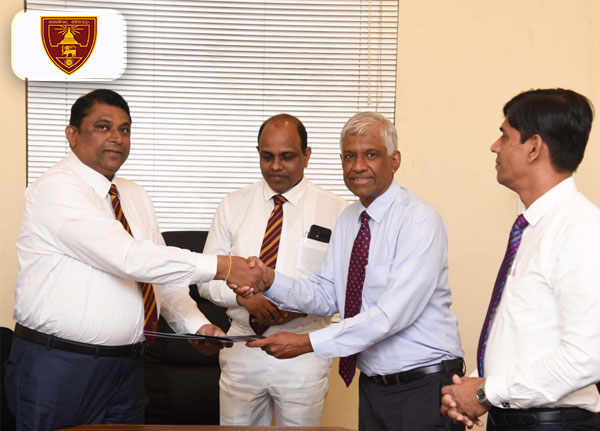

Research Collaborations

National Institute of Environmental Studies, Japan
Joint efforts in environmental engineering and pollution control, integrating Japanese technologies for sustainability.

Loughborough University, UK
Collaboration spans sports engineering, aerodynamics, and materials science, supported by joint PhD programs.

National Research Council, Canada
Partners in sustainable infrastructure and climate-resilient engineering, leveraging Canadian expertise for global challenges.

Indian Institute of Technology, Indore, India
Focuses on nanotechnology, renewable energy, and advanced materials, driving high-impact engineering solutions.

LNM Institute of Information Technology, India
Advances AI, cybersecurity, and data science research through shared labs, conferences, and faculty collaborations.

National Institute of Technology, Trichy, India
Joint research in civil, mechanical, and electrical engineering, fostering academic exchanges and industrial problem-solving.

Lusófona University, Portugal
Collaboration emphasizes media engineering and smart systems, integrating creative technologies with industrial applications.

NOVA University of Lisbon, Portugal
Focuses on ICT, robotics, and sustainable engineering, promoting student and faculty exchanges for joint innovation.

European Union
Facilitates cross-border research in green engineering and smart technologies, leveraging EU funding programs and international networks.

World Bank
Aims to advance infrastructure and sustainable engineering projects, aligning research with global development goals and funding opportunities.

National Science Foundation, Sri Lanka
Supports interdisciplinary engineering research, funding innovative projects and fostering scientific advancements for societal benefit.

National Research Council, Sri Lanka
Collaborative research in applied sciences and engineering, addressing national challenges through shared expertise and resource mobilization.